Aave is the Leading Decentralized Lending Protocol Revolutionizing DeFi
Aave is one of the most influential and widely-used decentralized finance protocols in the cryptocurrency ecosystem. Since its inception, Aave has transformed how users interact with digital assets by enabling permissionless lending and borrowing without the need for traditional financial intermediaries. This comprehensive guide explores everything you need to know about Aave, from its fundamental mechanics to its advanced features and future potential.
Understanding the Fundamentals of Aave
Aave is a decentralized non-custodial money market protocol that allows users to participate as either depositors or borrowers. The protocol operates entirely on blockchain technology, specifically built on top of the Ethereum network through a sophisticated system of smart contracts. These smart contracts ensure security, transparency, and eliminate the need for middlemen in financial transactions. What makes Aave particularly revolutionary is its ability to provide financial services that were previously only available through traditional banking institutions.
When users deposit assets into Aave, they provide liquidity to the protocol and earn passive income in return. This interest is generated from borrowers who pay fees to access the deposited funds. The beauty of Aave lies in its elegant design that creates a self-sustaining ecosystem where lenders and borrowers benefit mutually. Unlike traditional banks, Aave operates twenty-four hours a day, seven days a week, with no geographical restrictions or lengthy approval processes.
The History and Evolution of Aave
Aave started its journey under a different name, originally launched as ETHLend in 2017. The project underwent a significant rebranding and protocol upgrade to become Aave in 2020. This transformation marked a pivotal moment in decentralized finance history. The name Aave comes from the Finnish word for ghost, symbolizing the protocol's aim to create a transparent and open infrastructure for decentralized finance. Since its rebranding, Aave has experienced remarkable growth, with gains that have exceeded six thousand percent in certain periods, demonstrating the incredible potential of well-designed DeFi protocols.
The protocol's native token, originally called LEND, was migrated to AAVE during the protocol upgrade. This token serves multiple purposes within the ecosystem, including governance rights and staking capabilities. Holders of Aave tokens can participate in shaping the future direction of the protocol through decentralized governance mechanisms.
How Aave Works: A Deep Dive into the Protocol Mechanics
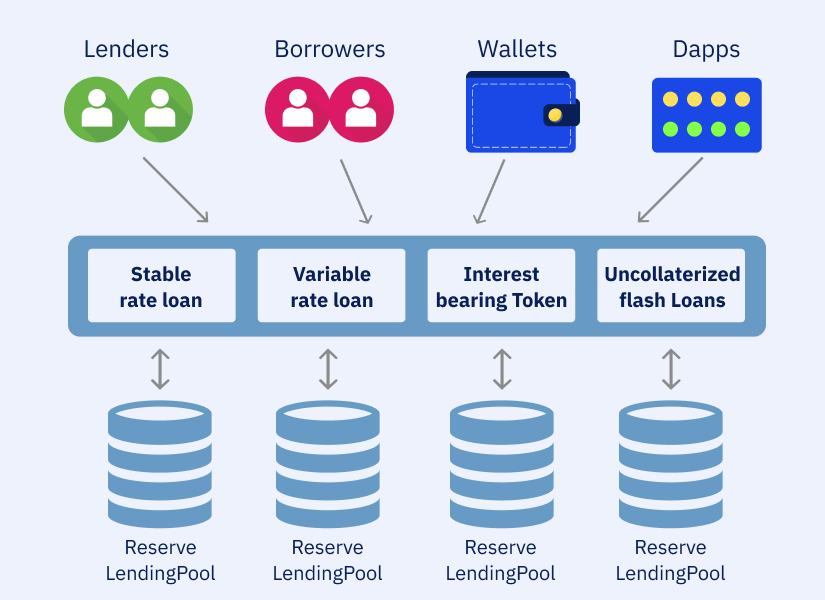
Aave operates through a system of liquidity pools where users can deposit various cryptocurrency assets. When you deposit funds into Aave, you receive corresponding aTokens that represent your deposit plus accumulated interest. These aTokens are interest-bearing tokens that automatically increase in value over time as the protocol generates yield from borrowing activities.
Depositing and Earning on Aave
Depositors on Aave provide liquidity to the market and earn passive income based on the utilization rate of the assets they deposit. The interest rates on Aave are algorithmically determined based on supply and demand dynamics within each liquidity pool. When borrowing demand is high, interest rates increase to incentivize more deposits. Conversely, when there is excess liquidity, rates decrease to encourage borrowing activity.
One of the most attractive features of Aave for depositors is the ability to earn yield on assets that would otherwise sit idle in a wallet. Instead of simply holding cryptocurrencies, users can put their assets to work and generate returns. Aave supports a wide variety of assets, giving users flexibility in choosing which cryptocurrencies they want to deposit and earn interest on.
Borrowing Mechanisms on Aave
Borrowing on Aave requires users to first deposit collateral. This over-collateralized borrowing model ensures the safety of depositor funds even if borrowers default on their loans. The amount you can borrow depends on the collateral factor of your deposited assets, which varies based on the risk profile of each cryptocurrency supported by Aave.
Aave offers two types of interest rates for borrowers: stable and variable. Stable rates provide predictability, allowing borrowers to plan their finances with certainty about their interest payments. Variable rates fluctuate based on market conditions and can be more cost-effective during periods of low demand. This flexibility sets Aave apart from many other lending protocols and caters to different user preferences and risk tolerances.
Flash Loans: Aave's Revolutionary Innovation
Perhaps the most groundbreaking innovation introduced by Aave is the concept of flash loans. Flash loans allow users to borrow assets without any collateral, provided that the borrowed amount plus fees is returned within the same blockchain transaction. This seemingly impossible financial instrument has opened up entirely new possibilities in decentralized finance.
Flash loans on Aave are primarily used for arbitrage opportunities, collateral swaps, and self-liquidation. Developers and sophisticated users leverage flash loans to execute complex trading strategies that would otherwise require significant capital. The introduction of flash loans by Aave has fundamentally changed how people think about capital efficiency in decentralized finance.
Use Cases for Flash Loans
Arbitrage traders use Aave flash loans to capitalize on price differences across various decentralized exchanges. By borrowing large amounts instantly, executing trades, and repaying within the same transaction, traders can profit from market inefficiencies without risking their own capital. This activity actually benefits the broader ecosystem by helping to align prices across different platforms.
Another popular use case for Aave flash loans is collateral swapping. Users with existing loans can use flash loans to change their collateral type without having to close their position. This flexibility is invaluable for managing risk and optimizing portfolio allocations without incurring unnecessary costs or tax events.
Aave Safety Module and Risk Management
Security is paramount in decentralized finance, and Aave has implemented robust risk management mechanisms to protect user funds. The Aave Safety Module is a critical component of the protocol's security infrastructure. Token holders can stake their Aave tokens in the Safety Module to earn rewards while simultaneously providing a backstop against potential shortfall events.
In the unlikely event of a protocol deficit, staked tokens in the Safety Module can be slashed to cover the shortfall. This mechanism aligns the incentives of token holders with the overall health of the protocol. Stakers are rewarded for taking on this risk through Safety Incentive rewards distributed by the protocol.
Governance and Decentralization
Aave is governed by its community through a decentralized autonomous organization structure. Holders of Aave tokens can propose and vote on changes to the protocol, including risk parameters, new asset listings, and protocol upgrades. This governance model ensures that Aave evolves according to the collective will of its stakeholders rather than being controlled by a centralized entity.
The governance process on Aave involves multiple stages, including discussion forums, snapshot voting, and on-chain execution. This multi-step process ensures that proposals are thoroughly vetted before implementation. The decentralized governance of Aave represents a significant departure from traditional financial institutions where decisions are made by small groups of executives.
Aave Across Multiple Blockchain Networks
While Aave originally launched on Ethereum, the protocol has expanded to multiple blockchain networks to improve accessibility and reduce transaction costs. Aave is now available on networks including Polygon, Avalanche, Arbitrum, and Optimism. This multi-chain strategy allows users to interact with Aave on their preferred network, benefiting from lower fees and faster transaction times.
The expansion of Aave to layer two solutions and alternative blockchains has significantly broadened its user base. Users who were previously priced out by high Ethereum gas fees can now access the full functionality of Aave at a fraction of the cost. This democratization of access aligns with the core ethos of decentralized finance.
Aave V3: The Latest Protocol Version
Aave V3 represents the latest evolution of the protocol, introducing several significant improvements over previous versions. Enhanced capital efficiency, improved risk management features, and cross-chain functionality are among the key upgrades. The Portal feature in Aave V3 enables seamless asset transfers between different networks, further enhancing the protocol's utility.
Isolation mode in Aave V3 allows the protocol to list new assets with limited exposure, reducing systemic risk while still providing users access to emerging tokens. Efficiency mode enables users to achieve higher borrowing power when supplying and borrowing correlated assets. These innovations demonstrate Aave's commitment to continuous improvement and innovation.
Comparing Aave to Traditional Finance
The differences between Aave and traditional banking are stark and highlight the transformative potential of decentralized finance. Traditional banks require extensive documentation, credit checks, and approval processes that can take days or weeks. Aave operates without any know-your-customer requirements, providing instant access to financial services for anyone with an internet connection and cryptocurrency.
Interest rates on Aave are determined by market forces rather than arbitrary decisions by financial institutions. This transparency ensures that users always know exactly what they are earning or paying. Additionally, Aave operates continuously without holidays or business hours, providing unprecedented accessibility to financial services.
The Advantages of Decentralized Lending
Aave eliminates counterparty risk through its smart contract-based architecture. Users maintain custody of their assets until they choose to interact with the protocol, and all transactions are executed automatically according to predefined rules. This trustless system removes the need to rely on third parties to act honestly or competently.
The composability of Aave with other DeFi protocols creates powerful synergies. Users can combine Aave with yield aggregators, trading platforms, and other financial applications to create sophisticated strategies. This interoperability is a unique advantage of decentralized finance that traditional financial systems cannot replicate.
Risks and Considerations When Using Aave
While Aave offers numerous benefits, users should be aware of the risks involved in decentralized finance. Smart contract risk is inherent to any blockchain-based protocol. Although Aave has undergone extensive audits and has a strong security track record, the possibility of vulnerabilities can never be completely eliminated.
Liquidation risk is another important consideration for borrowers on Aave. If the value of your collateral falls below the required threshold, your position may be liquidated to protect the protocol and depositors. Users should carefully monitor their health factor and maintain adequate collateral buffers to avoid unexpected liquidations.
Market Volatility and Its Impact
The cryptocurrency market is known for its volatility, which directly affects Aave users. Rapid price movements can trigger liquidations or significantly impact the value of deposited assets. Interest rates on Aave can also fluctuate substantially during periods of high market activity, affecting both lenders and borrowers.
Users should approach Aave with a clear understanding of these dynamics and implement appropriate risk management strategies. Diversification, conservative borrowing limits, and regular monitoring are essential practices for anyone participating in decentralized lending protocols like Aave.
The Future of Aave and Decentralized Finance
Aave continues to innovate and expand its offerings. The protocol is exploring institutional markets through Aave Arc, which provides a permissioned version of the protocol for entities requiring regulatory compliance. This initiative could bridge the gap between traditional finance and decentralized finance, bringing significant capital into the ecosystem.
The development of GHO, a decentralized stablecoin native to Aave, represents another exciting frontier. This stablecoin is overcollateralized by assets deposited in the protocol and could become a significant player in the stablecoin market. The integration of GHO into the Aave ecosystem would create additional utility and strengthen the protocol's position in decentralized finance.
Aave's Role in the Broader Ecosystem
As decentralized finance continues to mature, Aave is well-positioned to remain a cornerstone of the ecosystem. The protocol's track record of innovation, security, and community governance has established it as a trusted platform for millions of users worldwide. The total value locked in Aave consistently ranks among the highest of all DeFi protocols, demonstrating strong confidence from the community.
Aave's influence extends beyond its direct users. The innovations pioneered by Aave, particularly flash loans, have inspired countless other projects and use cases. The protocol serves as a foundation upon which other applications are built, contributing to the overall growth and sophistication of decentralized finance.
Getting Started with Aave
For those interested in using Aave, the process is straightforward. Users need a compatible cryptocurrency wallet such as MetaMask and some cryptocurrency to deposit. The Aave interface is intuitive and provides clear information about interest rates, risk parameters, and available assets. Educational resources are available to help newcomers understand the protocol and make informed decisions.
Before depositing funds, users should research the assets they plan to interact with and understand the associated risks. Starting with small amounts and gradually increasing exposure as familiarity grows is a prudent approach. The Aave community is active and helpful, providing support through various channels for users who have questions.
Aave represents a paradigm shift in how financial services can be delivered. By leveraging blockchain technology and smart contracts, Aave has created a system that is more accessible, transparent, and efficient than traditional alternatives. Whether you are looking to earn passive income on your cryptocurrency holdings or need to access liquidity without selling your assets, Aave provides powerful tools to achieve your financial goals in the decentralized economy.
Search on Youtube!